-

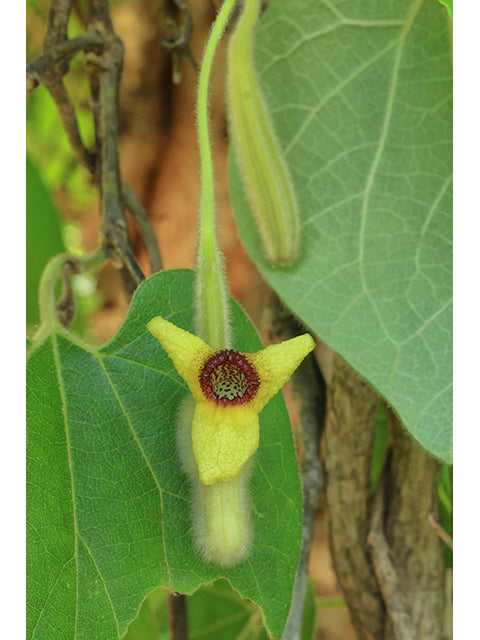
Woolly Dutchman’s Pipe / Photo credit: Alan Cressler

Woolly Dutchman's Pipe (Aristolochia tomentosa)
Woolly Dutchman's Pipe (Aristolochia tomentosa)
Low stock: 3 left
Couldn't load pickup availability
Woolly Dutchman’s Pipe
Aristolochia tomentosa
Other Common Names: Woolly Pipevine
Top Pick: A native woodland vine and important host plant for Pipevine Swallowtail caterpillars, with large heart-shaped leaves that can create a lush screen in part shade.
Quick Plant Info
- 🌤️ Light: Part Shade; Tolerates Sun
- 💧 Water: Medium
- 🌿 Type: Deciduous Perennial Vine
- 📏 Mature Size: Vigorous climbing vine capable of reaching 20–30+ ft with support
Plant Traits
Description
Grow the caterpillars, not just the butterflies.
Woolly Dutchman’s Pipe is a vigorous native vine best known for its role as a host plant for the Pipevine Swallowtail butterfly. Female butterflies lay their eggs on pipevines, and the developing caterpillars feed on the foliage.
Large, heart-shaped leaves create a lush mass of foliage that can cover a trellis, arbor, fence, or other sturdy support. The leaves are softly hairy, particularly underneath, giving the plant its “woolly” common name.
Its unusual pipe-shaped flowers are interesting when discovered beneath the foliage, but this plant's greatest garden impact comes from its foliage and its ecological role rather than a showy floral display.
🦋 Pipevine Swallowtail host plant
Woolly Dutchman’s Pipe is a larval host plant for the Pipevine Swallowtail. Planting host plants provides something nectar flowers alone cannot: a place for butterflies to reproduce and caterpillars to develop.
Caterpillars are also an important food source for many birds, particularly during nesting season, making host plants an important part of a landscape designed to support the broader food web.
🌿 Why it works
- Native Pipevine Swallowtail host plant
- Large heart-shaped leaves create dense summer foliage
- Excellent vertical habitat for woodland and wildlife gardens
- Useful on fences, trellises, arbors, and other sturdy supports
- Performs well in part shade
- Interesting native alternative to conventional ornamental vines
🌱 Where it thrives
Woolly Dutchman’s Pipe naturally occurs in wooded bottomlands, floodplains, streambanks, and similar habitats. In the garden, give it moderate moisture, some protection from the harshest afternoon sun, and a sturdy structure to climb.
- Butterfly gardens
- Woodland edges
- Wildlife gardens
- Trellises and arbors
- Fences
- Naturalistic landscapes
Soil: Performs well in moderately moist, reasonably well-drained soils with adequate organic matter.
✂️ Growth & maintenance
This is a vigorous woody vine, so plan for its mature size and provide a substantial support. Pruning can be used to direct growth or control its size as needed.
If growing Woolly Dutchman’s Pipe specifically for Pipevine Swallowtails, expect caterpillar feeding. Chewed leaves are evidence that the host plant is doing exactly what it was planted to do.
Important Notes
Aristolochia species contain aristolochic acids and should not be consumed by people or pets. This plant is grown for wildlife habitat and ornamental use, not as an edible or medicinal plant.
💧 Water (establishment note)
Water regularly during establishment. Once established, provide moderate moisture, particularly during prolonged hot and dry periods.
Pickup Information
Order online and select a pickup time at checkout. Plants are held for your scheduled pickup window.