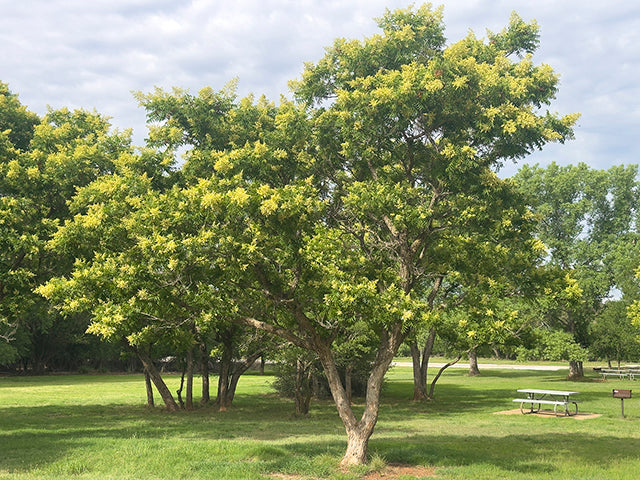
Western Soapberry
Sapindus saponaria var. drummondii
Other Common Names: Soapberry, Wild China Tree
Top Pick: A tough North Texas native tree with golden fall color, distinctive translucent fruit, and excellent value for birds and other wildlife.
Quick Plant Info
- ☀️ Light: Full Sun to Part Shade
- 💧 Water: Low to Medium
- 🌿 Type: Deciduous Tree
- 📏 Mature Size: Approximately 20–40 ft tall × 20–30 ft wide
Plant Traits
Native Status
Texas Native • North Texas Native
Wildlife Value
Bird Food, Caterpillar Food, Cover, Pollinator Support
Garden Use
Native Shade Tree, Wildlife Garden, Naturalized Landscape
Growth Behavior
Small to Medium Tree; May Produce Root Suckers
Seasonal Interest
Spring Flowers, Golden Fall Color, Persistent Amber Fruit
Description
A resilient North Texas native tree with wildlife value and four-season character.
Western Soapberry is a small to medium-sized native tree with an airy crown and attractive compound foliage. Small pale flowers appear in branching clusters and are followed by round fruits that mature from yellow to amber and become almost translucent as they age.
In fall, the foliage can turn a warm golden yellow, while clusters of fruit may remain on the tree after the leaves drop. Its tolerance of heat, drought, alkaline soils, and challenging sites makes it particularly well suited to Texas landscapes.
🌼 Why it works
- Native to North Texas
- Highly tolerant of heat and drought once established
- Handles alkaline and limestone-based soils
- Provides food and habitat for wildlife
- Supports native insects and caterpillars
- Golden fall foliage adds seasonal color
- Distinctive amber fruit can persist into winter
🐦 Wildlife value
Western Soapberry provides several layers of wildlife support. Its fruit is consumed by birds and other wildlife, while the tree provides cover and habitat structure.
The foliage also supports native insects, including caterpillars. This insect activity adds another food source for birds, particularly during the nesting season.
🌱 Where it thrives
Western Soapberry performs best in full sun but tolerates some shade. It is adaptable to a range of soils and is especially useful on dry, rocky, limestone-based, or alkaline sites.
- Native shade-tree plantings
- Wildlife gardens
- Large residential landscapes
- Naturalized areas
- Dry and difficult sites
Soil: Adaptable to clay, loam, sandy, rocky, and limestone-based soils. Good drought tolerance once established.
✂️ Growth & maintenance
Western Soapberry is generally low maintenance. Trees may produce root suckers and can form groves over time, particularly where they are allowed to grow naturally. Remove unwanted suckers if maintaining a single-tree form or a more formal landscape.
💧 Water (establishment note)
Water regularly during establishment. Once established, Western Soapberry is drought tolerant and generally requires little supplemental irrigation.
Important Notes
Western Soapberry fruit contains saponins and has historically been used as a soap substitute. The fruit is not edible and should not be consumed. Trees may also spread by root suckers, so consider available space when selecting a planting location.
Pickup Information
Order online and select a pickup time at checkout. Plants are held for your scheduled pickup window.
View Plant Sale Information & Policies