-

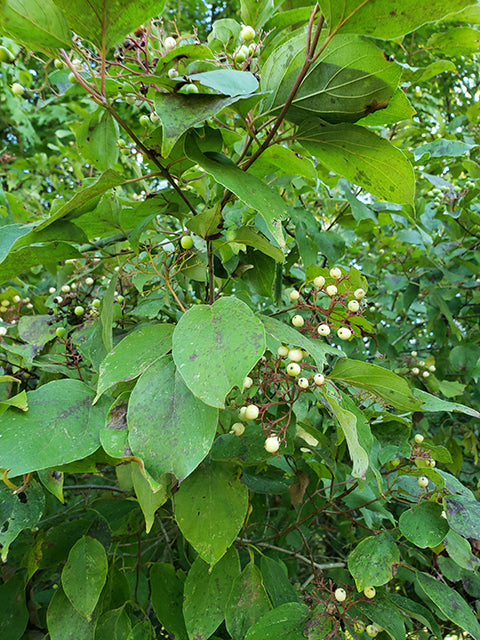
Roughleaf dogwood - Leaves & Flowers / Photo Credit: April Moore
-

Roughleaf dogwood - Berries / Photo Credit: April Moore


Roughleaf Dogwood (Cornus drummondii)
Roughleaf Dogwood (Cornus drummondii)
Low stock: 5 left
Couldn't load pickup availability
Roughleaf Dogwood
Cornus drummondii
Other Common Names: Rough-leaved Dogwood
Top Pick: A North Texas native shrub or small tree offering spring flowers, abundant wildlife value, attractive white fruit, and excellent habitat structure.
Quick Plant Info
- ☀️ Light: Full Sun to Part Shade
- 💧 Water: Low to Medium
- 🌿 Type: Deciduous Shrub / Small Tree
- 📏 Mature Size: Approximately 10–20 ft tall × 10–15 ft wide
Plant Traits
Description
A tough North Texas native with exceptional value for birds and other wildlife.
Roughleaf Dogwood is a large shrub or small tree with clusters of creamy-white flowers followed by showy white fruit. Its leaves have the distinctly rough texture that gives the species its common name.
Naturally occurring along woodland edges, stream corridors, thickets, and other transitional habitats, Roughleaf Dogwood is especially useful where the goal is to create layered wildlife habitat. It can be grown as an individual specimen, but its natural tendency is to sucker and gradually form colonies.
🌼 Why it works
- Native to North Texas
- Excellent wildlife habitat plant
- Flowers provide resources for pollinating insects
- White fruit provides food for birds and other wildlife
- Dense branching provides valuable cover and nesting structure
- Tolerates clay and alkaline soils
- Useful for naturalized screening and habitat restoration
🐦 Wildlife value
Roughleaf Dogwood is particularly valuable for birds. Its fruit is consumed by numerous bird species, while its dense branching provides cover and potential nesting sites.
As a native dogwood, it also supports native insects, including caterpillars, adding another important food source for insect-eating birds.
🌱 Where it thrives
Roughleaf Dogwood grows in full sun to part shade and adapts well to North Texas conditions. It naturally occurs in sites that may receive additional moisture but becomes quite drought tolerant once established.
- Wildlife gardens
- Woodland edges
- Native hedgerows
- Screening plantings
- Naturalized landscapes
- Habitat restoration areas
Soil: Adaptable to clay, loam, and limestone-based soils. It tolerates alkaline conditions and performs well in many North Texas soils.
✂️ Growth & maintenance
Roughleaf Dogwood naturally produces suckers and can gradually develop into a colony or thicket. Allow this behavior where screening, erosion control, or wildlife habitat is desired. In smaller or more formal landscapes, remove unwanted suckers to maintain a more defined form.
💧 Water (establishment note)
Water regularly during establishment. Once established, Roughleaf Dogwood is drought tolerant, although plants generally grow more vigorously with occasional supplemental moisture during extended dry periods.
Important Notes
Roughleaf Dogwood can spread by underground suckers and form colonies. Give it room to expand or plan to remove suckers periodically if a single specimen or more formal appearance is desired.
Pickup Information
Order online and select a pickup time at checkout. Plants are held for your scheduled pickup window.