-

Photo Credit: Michaela Kral

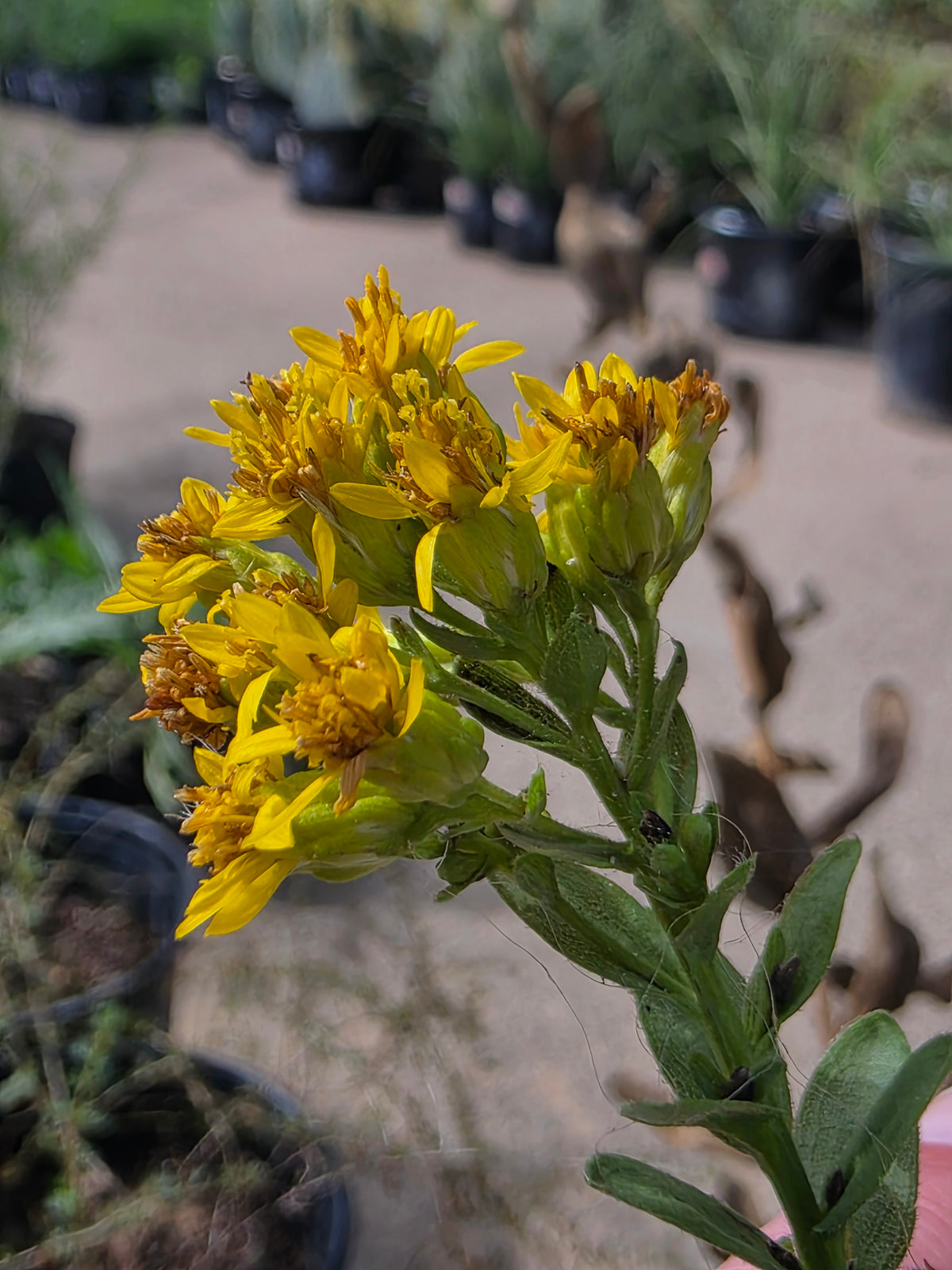
Rigid Goldenrod (Solidago rigida)
Rigid Goldenrod (Solidago rigida)
Low stock: 1 left
Couldn't load pickup availability
Rigid Goldenrod
Solidago rigida
Botanical Synonym: Oligoneuron rigidum
Other Common Names: Stiff Goldenrod
Top Pick: A bold North American native perennial with broad clusters of golden-yellow flowers, exceptional late-season pollinator value, and important ecological benefits for birds and other wildlife.
Quick Plant Info
- ☀️ Light: Full Sun
- 💧 Water: Low to Medium
- 🌿 Type: Herbaceous Perennial
- 📏 Mature Size: Approximately 2–5 ft tall × 1–2 ft wide
Plant Traits
Description
Big golden blooms, bold prairie structure, and a late-season feast for pollinators.
Rigid Goldenrod is a distinctive native perennial with strong, upright stems, broad leaves, and dense, relatively flat-topped clusters of brilliant golden-yellow flowers. Unlike goldenrods with long, arching flower sprays, this species produces substantial flower clusters that create a striking display in late summer and fall.
Its sturdy growth habit and architectural appearance make it an excellent addition to prairie-inspired landscapes, pollinator gardens, and naturalistic borders. The flowers are especially valuable late in the growing season, when many other native perennials have finished blooming.
Rigid Goldenrod also contributes to a healthy garden food web by supporting native insects, providing seeds for wildlife, and offering standing-stem habitat through winter.
🌼 Why it works
- Large, showy clusters of golden-yellow flowers
- Excellent late-season nectar and pollen source
- Supports native bees, butterflies, and other beneficial insects
- Contributes to the caterpillar food web supporting birds
- Produces seeds that may be eaten by small birds
- Strong, upright growth adds structure to prairie-style plantings
- Works beautifully alongside native grasses and fall-blooming asters
- Drought tolerant once established in suitable soil
- Standing stems and seedheads provide winter interest and wildlife habitat
🐦 Wildlife value
Goldenrods are among the most valuable late-season flowering plants in native landscapes. Rigid Goldenrod produces abundant nectar and pollen for native bees, butterflies, and other flower-visiting insects during an important period of seasonal transition.
As a native goldenrod, it also supports plant-feeding insects, including caterpillars that contribute to the food supply for insect-eating birds. Its seeds may provide food for small birds, while its upright stems offer additional structure and overwintering habitat for beneficial insects.
For the greatest ecological benefit, leave the seedheads and standing stems in place through winter rather than cutting the plant back immediately after flowering.
🌱 Where it thrives
Rigid Goldenrod performs best in full sun and well-drained soil. It is naturally associated with open prairie and meadow habitats and works particularly well in landscapes where its upright form has room to develop.
- Native prairie and meadow gardens
- Pollinator and wildlife gardens
- Sunny perennial borders
- Naturalistic mass plantings
- Plantings with Little Bluestem, Indiangrass, and native asters
Soil: Adaptable to a range of reasonably well-drained soils, including loam, sandy soils, and suitable clay. Avoid prolonged standing water and excessive fertilization, which can encourage overly lush growth.
✂️ Growth & maintenance
Rigid Goldenrod develops an upright, generally clump-forming growth habit and may self-seed where growing conditions are favorable. Allow adequate spacing for its mature height and flower clusters.
In rich soil or locations with insufficient sunlight, taller plants may benefit from neighboring vegetation for support. Avoid excessive fertilizer.
Leave stems and seedheads standing through winter to support wildlife. Cut back old growth in late winter or early spring before new growth begins.
💧 Water (establishment note)
Water regularly during establishment, allowing the soil to drain between waterings. Once established, Rigid Goldenrod tolerates periods of drought but benefits from occasional supplemental watering during extended dry conditions.
Important Notes
Goldenrods are frequently blamed for seasonal allergies because they bloom at approximately the same time as ragweed. However, goldenrod pollen is primarily carried by insects rather than wind and is not a major cause of seasonal hay fever.
Rigid Goldenrod is a taller prairie perennial. Consider its mature height when selecting a planting location, particularly in smaller or more formal garden beds.
Pickup Information
Order online and select a pickup time at checkout. Plants are held for your scheduled pickup window.