-

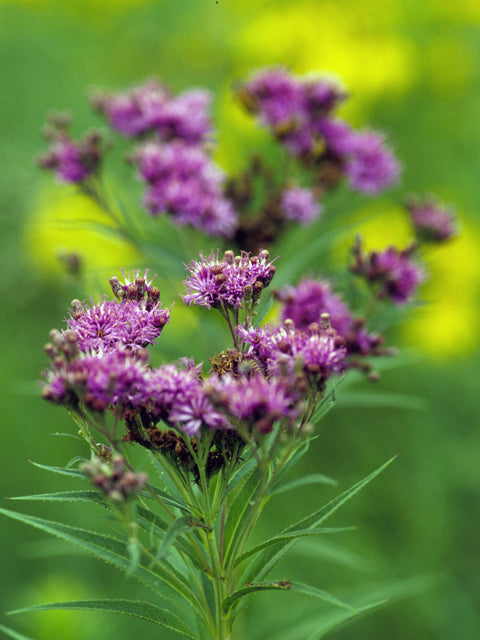
Prairie ironweed / Photo Credit: Sally and Andy Wasowski

Prairie Ironweed (Vernonia Fasciculata)
Prairie Ironweed (Vernonia Fasciculata)
Low stock: 10 left
Couldn't load pickup availability
Prairie Ironweed
Vernonia fasciculata
Other Common Names: Common Ironweed, Smooth Ironweed
Top Pick: A tall North Texas native perennial with vivid purple late-season flowers that provide an important nectar source for butterflies, bees, and other pollinators.
Quick Plant Info
- ☀️ Light: Full Sun
- 💧 Water: Medium to High
- 🌿 Type: Perennial Wildflower
- 📏 Mature Size: Approximately 3–6 ft tall × 2–3 ft wide
Plant Traits
Description
A bold native wildflower that brings intense purple color and abundant pollinator activity to the late-season garden.
Prairie Ironweed is an upright perennial with strong stems topped by dense clusters of vivid purple flowers. Blooming primarily from summer into fall, it provides color and nectar at a time when many spring and early-summer wildflowers have finished flowering.
Naturally associated with moist prairies, low meadows, stream margins, and similar habitats, Prairie Ironweed is especially useful in landscapes with consistent moisture or areas that periodically collect water.
🌼 Why it works
- Native to North Texas
- Brilliant purple summer and fall flowers
- Excellent late-season nectar source
- Highly attractive to butterflies and bees
- Useful in rain gardens and moist prairie plantings
- Strong vertical structure adds height to perennial plantings
- Pairs beautifully with native grasses and other late-blooming wildflowers
🦋 Wildlife value
Prairie Ironweed is an excellent nectar plant for butterflies, bees, and other pollinating insects. Its late flowering period makes it particularly valuable as part of a garden designed to provide nectar throughout the growing season.
Ironweeds also support native caterpillars, adding another layer of ecological value and providing insect food for birds.
🌱 Where it thrives
Prairie Ironweed performs best in full sun with medium to consistently moist soil. It is particularly well suited to sites that receive more moisture than many traditional prairie plants prefer.
- Pollinator gardens
- Prairie and meadow plantings
- Rain gardens
- Low areas and drainage zones
- Naturalistic perennial borders
Soil: Adaptable to several soil types, including clay, when adequate moisture is available.
✂️ Growth & maintenance
Prairie Ironweed is a tall, upright perennial that can gradually expand into colonies where growing conditions are favorable. Give it room in naturalistic plantings, or divide and control its spread where a more defined planting is desired.
Leave stems and seedheads standing through winter when possible to provide habitat structure, then cut back before new spring growth begins.
💧 Water (establishment note)
Water regularly during establishment. Established plants tolerate some seasonal dryness but perform best where moderate moisture is available, particularly during prolonged summer drought.
Pickup Information
Order online and select a pickup time at checkout. Plants are held for your scheduled pickup window.
View Plant Sale Information & Policies
Vernonia baldwinii Torr.
Western Ironweed, Baldwin's Ironweed, Ironweed
Asteraceae (Aster Fam
Prairie Ironweed
Vernonia fasciculata
Other Common Names: Common Ironweed, Smooth Ironweed
Top Pick: A tall North Texas native perennial with vivid purple late-season flowers that provide an important nectar source for butterflies, bees, and other pollinators.
Quick Plant Info
- ☀️ Light: Full Sun
- 💧 Water: Medium to High
- 🌿 Type: Perennial Wildflower
- 📏 Mature Size: Approximately 3–6 ft tall × 2–3 ft wide
Plant Traits
Description
A bold native wildflower that brings intense purple color and abundant pollinator activity to the late-season garden.
Prairie Ironweed is an upright perennial with strong stems topped by dense clusters of vivid purple flowers. Blooming primarily from summer into fall, it provides color and nectar at a time when many spring and early-summer wildflowers have finished flowering.
Naturally associated with moist prairies, low meadows, stream margins, and similar habitats, Prairie Ironweed is especially useful in landscapes with consistent moisture or areas that periodically collect water.
🌼 Why it works
- Native to North Texas
- Brilliant purple summer and fall flowers
- Excellent late-season nectar source
- Highly attractive to butterflies and bees
- Useful in rain gardens and moist prairie plantings
- Strong vertical structure adds height to perennial plantings
- Pairs beautifully with native grasses and other late-blooming wildflowers
🦋 Wildlife value
Prairie Ironweed is an excellent nectar plant for butterflies, bees, and other pollinating insects. Its late flowering period makes it particularly valuable as part of a garden designed to provide nectar throughout the growing season.
Ironweeds also support native caterpillars, adding another layer of ecological value and providing insect food for birds.
🌱 Where it thrives
Prairie Ironweed performs best in full sun with medium to consistently moist soil. It is particularly well suited to sites that receive more moisture than many traditional prairie plants prefer.
- Pollinator gardens
- Prairie and meadow plantings
- Rain gardens
- Low areas and drainage zones
- Naturalistic perennial borders
Soil: Adaptable to several soil types, including clay, when adequate moisture is available.
✂️ Growth & maintenance
Prairie Ironweed is a tall, upright perennial that can gradually expand into colonies where growing conditions are favorable. Give it room in naturalistic plantings, or divide and control its spread where a more defined planting is desired.
Leave stems and seedheads standing through winter when possible to provide habitat structure, then cut back before new spring growth begins.
💧 Water (establishment note)
Water regularly during establishment. Established plants tolerate some seasonal dryness but perform best where moderate moisture is available, particularly during prolonged summer drought.
Pickup Information
Order online and select a pickup time at checkout. Plants are held for your scheduled pickup window.
View Plant Sale Information & Policies
ily)Synonym(s):
USDA Symbol: VEBA
Western ironweed’s 3-5 ft. stems occur singly or in clumps, and are stout and hairy. Wide clusters of vibrant, red-violet flowers form at the ends of short branches near the top of the plant. Because the flowers are all of the disc variety, the 6 in. wide flower cluster has a fuzzy appearance. Long, lance-shaped leaves line the stems.
This plant aggressively colonizes by rhizomes once established so place accordingly. Its bloom period lasts until frost.
Plant Characteristics
Habit: Herb
Size Notes: Up to about 5 feet tall.
Fruit: Fruit is a cypsela (pl. cypselae). Though technically incorrect, the fruit is often referred to as an achene.
Bloom Time: Jul , Aug , Sep , Oct , Nov
Distribution
USA: AR , CO , IA , IL , KS , LA , MN , MO , NE , NM , OK , SD , TX
Native Distribution: S.c. IL to NE, s. to LA & TX
Native Habitat: Disturbed sites; open woods; fields
Growing Conditions
Water Use: LowLight Requirement: Sun
Soil Moisture: Moist
Soil Description: Rocky or sandy soils. Clay, Clay Loam, Medium Loam, Sandy Loam, Sandy, Limestone-based, Caliche type
Conditions Comments: Best in natural areas and large meadows where large colonies can be appreciated. Can be rampant colonizer when planted in garden soils. Roots travel in all directions from plant about one foot deep. Difficult to control once plant is well established. Bloom period lasts from summer until frost.
Benefit
Use Ornamental: Perennial garden, Pocket prairieConspicuous Flowers: yes
Attracts: Birds , Butterflies
Deer Resistant: High
https://www.wildflower.org/plants/result.php?id_plant=VEBA