-

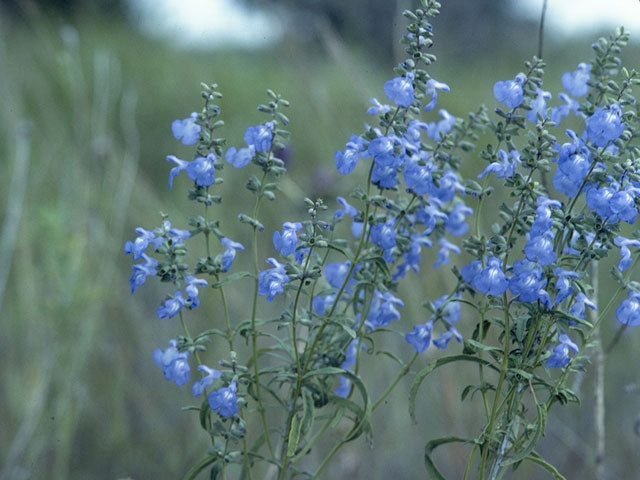
Pitcher sage / Photo Credit: Bruce Leander
-

Pitcher sage / Photo Credit: W.D. and Dolphia Bransford


Pitcher Sage (Salvia azurea) - ORGANICALLY GROWN
Pitcher Sage (Salvia azurea) - ORGANICALLY GROWN
Low stock: 2 left
Couldn't load pickup availability
Pitcher Sage
Salvia azurea
Other Common Names: Azure Blue Sage, Blue Sage
🌱 Organically grown from locally collected seed — well adapted to our area.
Top Pick: A locally sourced native prairie sage with clear blue late-season flowers that attract hummingbirds, butterflies, bees, and other pollinators.
Quick Plant Info
- ☀️ Light: Full Sun to Part Shade
- 💧 Water: Low
- 🌿 Type: Perennial Wildflower
- 📏 Mature Size: Approximately 3–5 ft tall × 2–3 ft wide
Plant Traits
Description
Clear blue flowers bring uncommon color and valuable late-season nectar to the native garden.
Pitcher Sage is a tall native perennial with slender stems topped by spikes of clear blue flowers from late summer into fall. The unusual blue color stands out beautifully among warm-toned fall wildflowers and native grasses.
Its flowers attract hummingbirds, butterflies, bees, and other pollinators, making Pitcher Sage especially valuable during the later part of the growing season when fewer plants may be in bloom.
🌱 Locally collected & organically grown
These plants were organically grown from seed collected locally, helping preserve plant material already adapted to the conditions of our area. Locally sourced native plants can also help maintain the ecological relationships between native plants, insects, birds, and other wildlife in our region.
🌼 Why it works
- Organically grown from locally collected seed
- Native to North Texas
- Beautiful clear blue flowers
- Provides late-season nectar for pollinators
- Attracts hummingbirds, butterflies, and bees
- Handles heat and drought once established
- Performs well in clay as well as other well-drained soils
- Excellent companion for native grasses and fall-blooming wildflowers
🐦 Wildlife value
Pitcher Sage provides nectar for hummingbirds, butterflies, native bees, and other pollinating insects. Its late-summer and fall flowering period helps extend the season of available nectar in a wildlife garden.
🌱 Where it thrives
Plant Pitcher Sage in full sun to light part shade. It performs well in prairie-style plantings and sunny native gardens and tolerates a range of soils, including the heavy clay common in North Texas.
- Pollinator gardens
- Hummingbird gardens
- Prairie and meadow plantings
- Naturalistic borders
- Native grass gardens
- Low-water landscapes
Soil: Adaptable to a range of soils, from heavy clay to sandy soils, provided drainage is adequate.
✂️ Growth & maintenance
Pitcher Sage naturally develops a tall, airy form. In more formal landscapes, stems can be cut back earlier in the growing season to encourage shorter, bushier growth before flowering.
Leave some flowering stems standing after bloom for winter structure and habitat value, then cut back old growth before new spring growth begins.
💧 Water (establishment note)
Water regularly during establishment while allowing the soil to drain between waterings. Once established, Pitcher Sage is drought tolerant and generally requires little supplemental irrigation.
Pickup Information
Order online and select a pickup time at checkout. Plants are held for your scheduled pickup window.