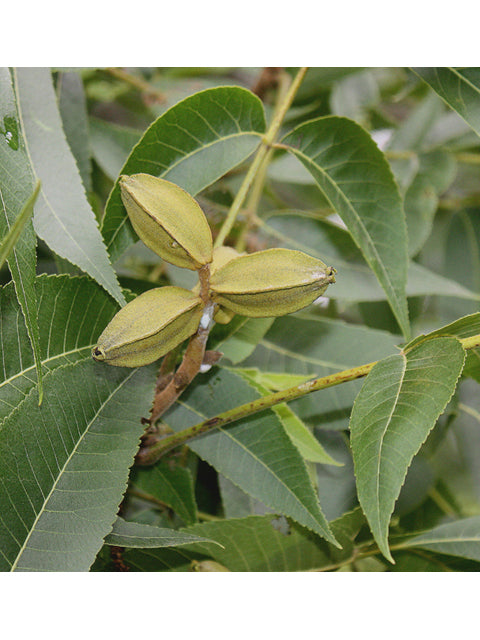
Pecan (Carya illinoinensis)
Pecan (Carya illinoinensis)
Low stock: 2 left
Couldn't load pickup availability
Pecan
Carya illinoinensis
Top Pick: A magnificent North Texas native canopy tree that produces edible pecans while supporting caterpillars, birds, pollinators, and other wildlife.
Quick Plant Info
- ☀️ Light: Full Sun
- 💧 Water: Medium
- 🌳 Type: Deciduous Canopy Tree
- 📏 Mature Size: Approximately 70–100+ ft tall × 40–75 ft wide
Plant Traits
Description
Plant a pecan and you're planting much more than a nut tree.
Pecan is a large, long-lived native canopy tree and the state tree of Texas. Mature trees develop broad crowns that provide substantial summer shade while producing the familiar edible pecans enjoyed by people and wildlife.
Pecans are also members of the hickory family and support a wide variety of native insects, including caterpillars that become food for birds. A mature native canopy tree can provide feeding, shelter, nesting, and other habitat opportunities across multiple layers of the food web.
🌳 A native canopy tree
Pecan is not a small-yard tree. Mature specimens can become enormous and should be planted where their eventual height, canopy, roots, falling nuts, and branches can be accommodated.
Given enough space, however, a pecan can become a major long-term component of a wildlife landscape and provide shade and habitat for generations.
🌰 Edible pecans
Pecan trees produce edible nuts, but seed-grown trees vary naturally in nut size, shell thickness, flavor, production, and age at first bearing. Plants not sold as named fruit cultivars should not be expected to produce the same uniform crop as grafted orchard varieties.
Pecans are wind-pollinated and generally produce better crops when genetically different pecan trees with compatible flowering periods are growing within pollination distance.
🐦 Wildlife value
Pecans provide food for many forms of wildlife. The nuts are eaten by birds and mammals, while the foliage supports native insects and caterpillars.
Those caterpillars are especially important to birds raising young. As the tree matures, its branches and canopy also provide cover, perching opportunities, and potential nesting habitat.
🌿 Why it works
- Native to North Texas
- Large, long-lived shade and canopy tree
- Produces edible pecans
- Important native caterpillar host
- Provides food for birds and other wildlife
- Creates cover and nesting structure as it matures
- Excellent long-term tree for large properties
- Strong choice for habitat restoration and canopy development
🌱 Where it thrives
Pecans naturally favor deep soils associated with river bottoms, floodplains, and other locations where their extensive root systems can access moisture. In landscapes, they perform best in full sun with adequate soil depth and room for unrestricted growth.
- Large residential properties
- Parks and open spaces
- Wildlife landscapes
- Riparian and floodplain restoration
- Large shade-tree plantings
- Native canopy restoration
Soil: Performs best in deep, fertile, reasonably moist soil but can tolerate a range of conditions once established. Adequate soil depth is particularly important for long-term development.
✂️ Growth & maintenance
Give Pecan its permanent space from the beginning. Avoid planting beneath utility lines, immediately beside buildings, or in locations where a very large mature canopy would create conflicts.
Young trees benefit from thoughtful structural pruning as they develop. Mature trees generally require little intervention when given adequate growing space.
💧 Water (establishment note)
Water deeply and regularly while young to encourage a strong root system. Established trees can tolerate periods of dry weather, but adequate moisture supports stronger growth and nut production.
Pickup Information
Order online and select a pickup time at checkout. Plants are held for your scheduled pickup window.