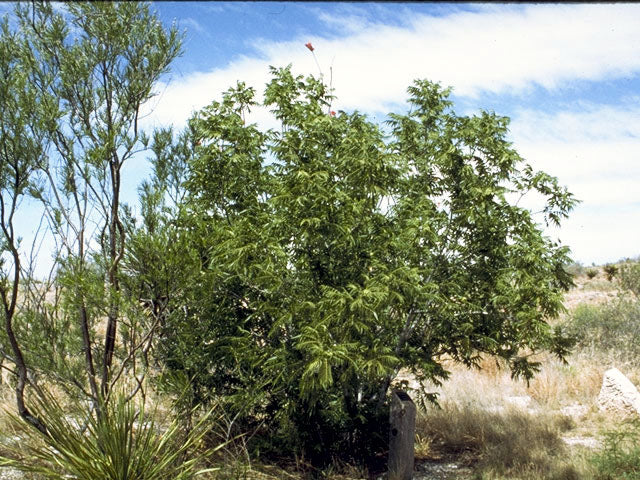
-

Little walnut - Fruit / Photo Credit: Norman G. Flaigg
-

Little walnut - Tree / Photo Credit: Norman G. Flaigg


Little Walnut (Juglans microcarpa)
Little Walnut (Juglans microcarpa)
Low stock: 1 left
Couldn't load pickup availability
Little Walnut
Juglans microcarpa
Other Common Names: Texas Walnut, Little Black Walnut
Quick Plant Info
- ☀️ Light: Full Sun to Part Shade
- 💧 Water: Low to Medium
- 🌿 Type: Small Tree / Large Shrub
- 📏 Mature Size: Approximately 15–30 ft tall × 10–20 ft wide
Plant Traits
Description
A tough Texas-native walnut with a naturally smaller stature and excellent wildlife value.
Little Walnut is a small tree or large shrub native to central and western Texas. Unlike the much larger Black Walnut, it typically develops into a relatively compact, often multi-stemmed plant with attractive compound foliage and small walnuts.
Naturally found along rocky waterways, canyons, and drainage areas, Little Walnut handles heat, alkaline soils, and seasonal drought remarkably well. Its manageable size makes it an interesting native-tree option where a full-sized walnut would be far too large.
🌼 Why it works
- Texas-native small tree
- Excellent heat and drought tolerance once established
- Adapted to rocky and alkaline soils
- More manageable size than larger walnut species
- Produces nuts used by wildlife
- Provides long-term habitat value
🐦 Wildlife value
The small walnuts provide food for wildlife, while the branches and foliage contribute cover and habitat structure.
As a native walnut, Little Walnut also serves as a host plant for native insects, making it valuable beyond the animals that feed directly on its nuts.
🌱 Where it thrives
Little Walnut grows best in full sun to part shade and is particularly well suited to rocky, limestone-based, and alkaline soils. Although it naturally occurs near waterways and drainage areas, established plants tolerate substantial seasonal dryness.
- Wildlife gardens
- Native tree plantings
- Naturalized landscapes
- Rocky or limestone sites
- Large residential landscapes
Soil: Adaptable, with particularly good tolerance of rocky, limestone, and alkaline soils. Avoid sites with persistently waterlogged soil.
✂️ Growth & maintenance
Little Walnut is relatively low maintenance once established. It may grow as a single-trunk tree or develop a multi-stemmed form depending on site conditions and pruning.
💧 Water (establishment note)
Water regularly during establishment. Mature plants are drought tolerant but can also take advantage of additional moisture in drainage areas and similar sites.
Important Notes
Like other walnuts, Little Walnut produces juglone and other compounds that can inhibit the growth of some sensitive plants nearby. Consider surrounding plant choices when incorporating it into a designed landscape.
Pickup Information
Order online and select a pickup time at checkout. Plants are held for your scheduled pickup window.