-

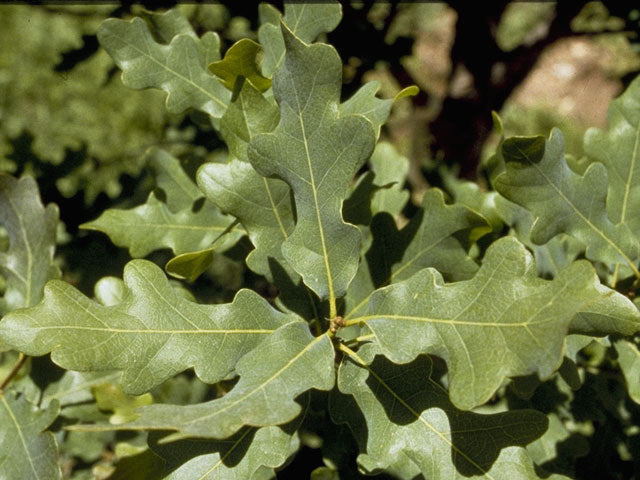
Lacey Oak / Photo Credit: Norman G. Flaigg

Lacey Oak (Quercus laceyi)
Lacey Oak (Quercus laceyi)
Low stock: 2 left
Couldn't load pickup availability
Lacey Oak
Quercus laceyi
Other Common Names: Blue Oak, Canyon Oak
Top Pick: A beautiful, smaller Texas native oak with distinctive blue-green foliage, a naturally rounded canopy, and exceptional long-term value for birds and other wildlife.
Quick Plant Info
- ☀️ Light: Full Sun to Part Shade
- 💧 Water: Low
- 🌳 Type: Small to Medium Deciduous Tree
- 📏 Mature Size: Approximately 25–40 ft tall × 25–35 ft wide
Plant Traits
Description
All the ecological benefits of an oak, in a size that works beautifully in a residential landscape.
Lacey Oak is a distinctive Texas native tree admired for its softly rounded canopy and attractive blue-green foliage. New leaves emerge with a subtle peach or pinkish tint before maturing to a muted blue-green, creating a beautiful contrast with surrounding plants.
Naturally occurring in the limestone hills and canyons of Central Texas, Lacey Oak is adapted to rocky, alkaline soils and relatively dry conditions. Its smaller mature size makes it an excellent alternative to larger shade oaks where space is more limited.
As a native oak, it also contributes substantial ecological value, supporting caterpillars and other insects that feed birds, producing acorns for wildlife, and providing long-term canopy structure for shelter and nesting.
🌳 Why it works
- Beautiful blue-green foliage with attractive spring and fall color
- Smaller mature size than many traditional shade oaks
- Excellent long-term wildlife and bird habitat
- Supports native caterpillars and other beneficial insects
- Produces acorns eaten by birds and mammals
- Provides nesting opportunities and protective canopy cover
- Drought tolerant once established
- Well adapted to alkaline and limestone-based soils
- Excellent specimen or small shade tree for residential landscapes
🐦 Wildlife value
Native oaks are foundational plants in wildlife-supporting landscapes. Lacey Oak serves as a host for native caterpillars and other insects, which in turn provide essential food for insect-eating birds, particularly during nesting season.
Its acorns provide an additional food resource for birds and mammals, while the developing canopy offers shelter, perching sites, and potential nesting habitat.
Allowing some fallen leaves to remain beneath the tree also helps preserve habitat for overwintering insects and supports the broader garden food web.
🌱 Where it thrives
Lacey Oak performs best in full sun and well-drained soil. It is particularly well suited to rocky, limestone-based landscapes and can tolerate part shade, especially when young.
- Residential landscapes with room for a medium-sized canopy
- Wildlife gardens and bird-friendly landscapes
- Native tree plantings
- Dry, well-drained slopes
- Naturalistic and designed landscapes
- Specimen or small shade tree locations
Soil: Prefers well-drained, alkaline or limestone-based soils. Avoid locations with prolonged standing water or persistently saturated soil.
✂️ Growth & maintenance
Lacey Oak develops a naturally attractive rounded canopy and generally requires relatively little maintenance once established.
Young trees may benefit from selective structural pruning to encourage a strong branching framework. Avoid unnecessary heavy pruning, particularly as the tree matures.
Allow adequate room for the mature canopy and avoid planting too close to buildings, overhead utilities, or other large trees.
💧 Water (establishment note)
Water deeply and consistently during establishment, allowing the soil to drain between waterings. Once established, Lacey Oak is drought tolerant and generally requires little supplemental irrigation under suitable site conditions.
Important Notes
Although Lacey Oak is a Texas native, its natural distribution is primarily associated with Central Texas and the Edwards Plateau rather than North Texas. It can be a successful landscape tree in North Texas when planted in an appropriate location with good drainage.
Like other oaks, Lacey Oak is a long-term landscape investment. Select its planting location with its mature canopy and root system in mind.
Pickup Information
Order online and select a pickup time at checkout. Plants are held for your scheduled pickup window.