-

Photo by Marilyn McBroom Knight

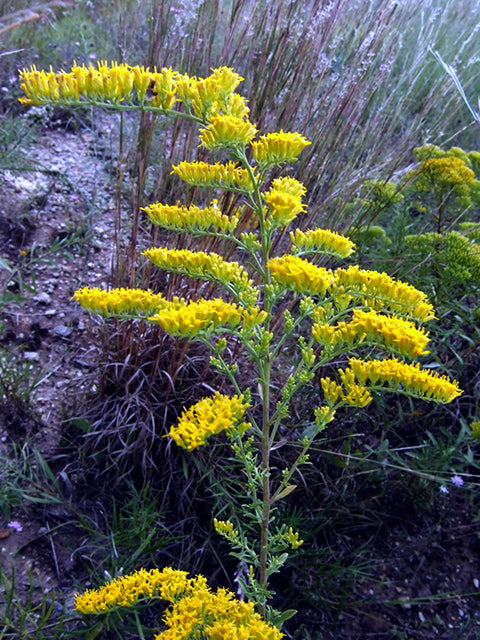
Gray Goldenrod (Solidago nemoralis)
Gray Goldenrod (Solidago nemoralis)
18 in stock
Couldn't load pickup availability
Gray Goldenrod
Solidago nemoralis
Other Common Names: Old-field Goldenrod, Field Goldenrod
Top Pick: A compact North Texas native goldenrod that brings beautiful golden-yellow flowers to late-season gardens while supporting native bees, butterflies, caterpillars, and birds.
Quick Plant Info
- ☀️ Light: Full Sun to Part Shade
- 💧 Water: Low
- 🌿 Type: Herbaceous Perennial
- 📏 Mature Size: Approximately 1–3 ft tall × 1–2 ft wide
Plant Traits
Description
A golden finale for the native garden—and an important late-season resource for wildlife.
Gray Goldenrod is a relatively compact North Texas native perennial known for its graceful, arching clusters of small golden-yellow flowers. The blooms develop along one-sided, gently curving branches, creating a softer and more delicate appearance than many taller goldenrod species.
Naturally found in prairies, open fields, and dry, sunny habitats, Gray Goldenrod is well suited to low-water landscapes and naturalistic plantings.
Its late-season flowering period is especially valuable, providing nectar and pollen when many spring and summer wildflowers have finished blooming.
🌼 Why it works
- Beautiful golden-yellow flowers in late summer and fall
- More compact than many other goldenrod species
- Excellent late-season nectar and pollen source
- Supports native bees, butterflies, and other beneficial insects
- Host plant for native caterpillars
- Seeds provide food for small birds
- Excellent drought tolerance once established
- Useful in prairie gardens, meadows, and sunny borders
- Provides standing-stem habitat through winter
🐦 Wildlife value
Goldenrods are among the most valuable late-season flowering plants for native insects. Gray Goldenrod provides nectar and pollen for bees, butterflies, and other flower-visiting insects, including species preparing for winter or completing their final reproductive cycles.
As a native goldenrod, it also supports plant-feeding caterpillars and other insects that contribute to the food web supporting birds.
After flowering, its seeds may be eaten by small seed-feeding birds. Leaving stems and seedheads standing through winter also preserves shelter and overwintering sites for insects.
🌱 Where it thrives
Gray Goldenrod performs best in full sun and relatively dry, well-drained soil. It tolerates part shade, although flowering is generally strongest in sunnier locations.
- Native prairies and meadows
- Pollinator gardens
- Low-water landscapes
- Sunny perennial borders
- Naturalistic mass plantings
- Wildlife gardens
Soil: Adaptable to sandy, rocky, loamy, and reasonably well-drained clay soils. Particularly well suited to leaner, drier sites. Avoid persistently wet soil and excessive fertilization.
✂️ Growth & maintenance
Gray Goldenrod requires little maintenance once established. It may gradually form small colonies through short rhizomes and can also spread by seed where conditions are favorable.
Unlike some larger goldenrod species, it generally maintains a more restrained growth habit, although unwanted seedlings can be removed if necessary.
Leave stems standing through winter to provide wildlife habitat. Cut back old growth in late winter or early spring before new growth begins.
💧 Water (establishment note)
Water regularly during establishment, allowing the soil to dry somewhat between waterings. Once established, Gray Goldenrod is drought tolerant and generally requires little supplemental irrigation.
Important Notes
Goldenrod is frequently blamed for seasonal allergies because it flowers at the same time as ragweed. However, goldenrod pollen is primarily transported by insects rather than wind and is not a major cause of seasonal hay fever.
Pickup Information
Order online and select a pickup time at checkout. Plants are held for your scheduled pickup window.