-

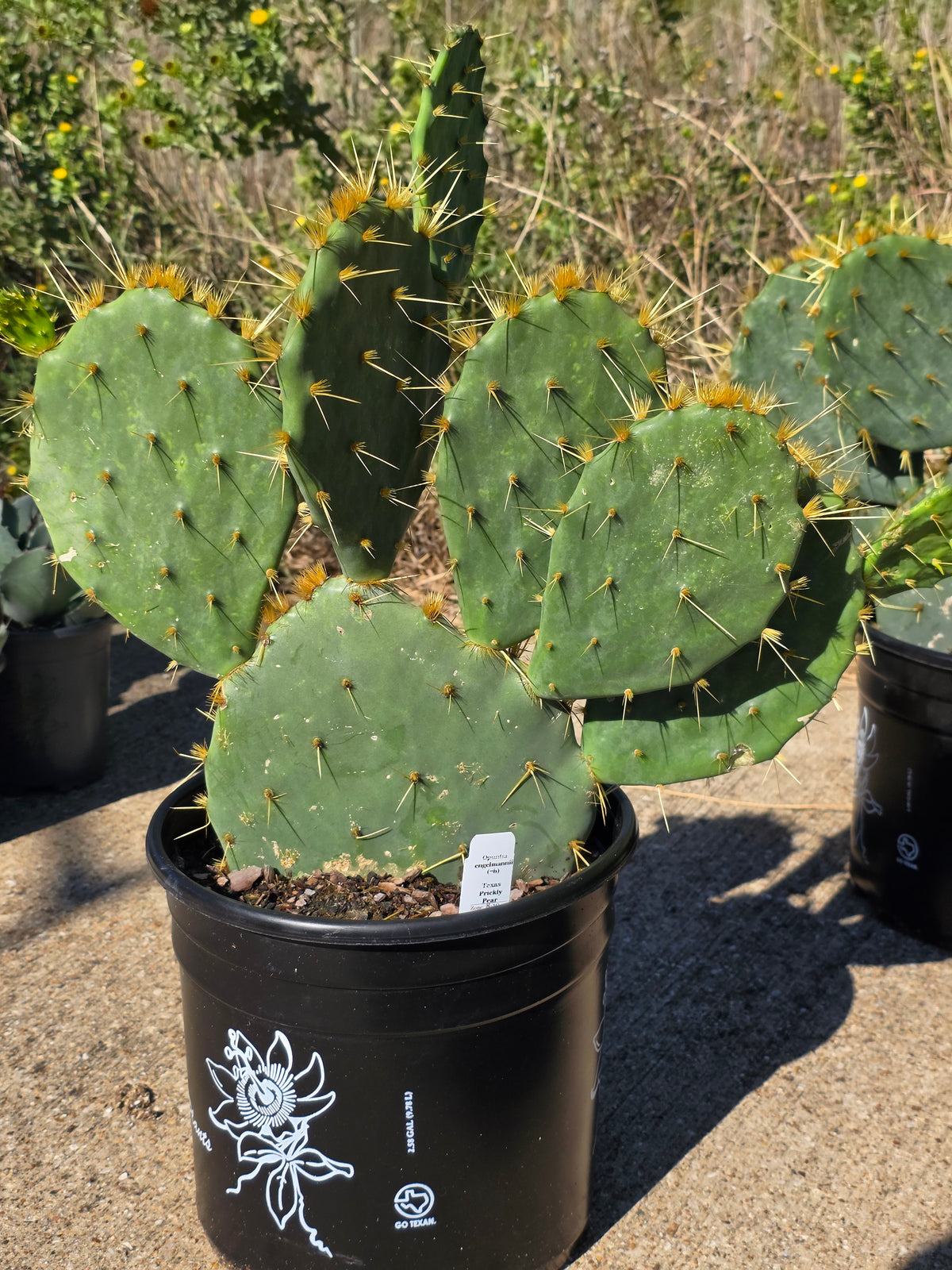
Engelmann’s Prickly Pear / Photo Credit: Michaela Kral

Engelmann’s Prickly Pear (Opuntia engelmannii)
Engelmann’s Prickly Pear (Opuntia engelmannii)
Low stock: 3 left
Couldn't load pickup availability
Engelmann’s Prickly Pear
Opuntia engelmannii
Other Common Names: Prickly Pear, Cactus Apple, Texas Prickly Pear
Top Pick: A tough native prickly pear with bold architectural form, showy flowers, edible fruit, and excellent drought tolerance.
Quick Plant Info
- ☀️ Light: Full Sun
- 💧 Water: Low
- 🌿 Type: Evergreen Cactus / Succulent
- 📏 Mature Size: Approximately 3–6 ft tall × 4–8 ft wide
Plant Traits
North Texas Native
Description
A rugged Texas-native cactus that combines dramatic form, colorful flowers, and important wildlife value.
Engelmann’s Prickly Pear forms broad clumps of large, flattened green pads armed with spines and tiny hair-like glochids. Showy flowers appear in the warmer months, followed by fleshy reddish-purple fruits.
Extremely tolerant of heat and drought, this prickly pear is an excellent choice for sunny, low-water landscapes. Its distinctive form works particularly well in xeric and naturalistic designs where it has plenty of room to develop.
🌼 Why it works
- Native to Texas and North Texas
- Exceptional heat and drought tolerance
- Showy seasonal flowers
- Provides food and shelter for wildlife
- Bold architectural form
- Requires very little maintenance once established
🐦 Wildlife value
Flowers provide resources for pollinating insects, while the fleshy fruits are eaten by birds and other wildlife. Dense prickly pear growth can also provide protective cover for small animals.
🌱 Where it thrives
Best in full sun with well-drained soil. Engelmann’s Prickly Pear is naturally adapted to dry, exposed sites and performs well in areas where many conventional landscape plants struggle.
- Xeriscape and water-wise landscapes
- Prairie and meadow plantings
- Wildlife gardens
- Rock gardens
- Naturalized areas
- Large design-forward plantings
Soil: Adaptable to a range of soils provided drainage is adequate. Particularly well suited to rocky, gravelly, and dry soils.
✂️ Growth & maintenance
Very low maintenance once established. Plants can gradually form substantial clumps, and detached pads can root where they contact suitable soil. Allow adequate space or remove unwanted pads as needed to control spread.
💧 Water (establishment note)
Water occasionally during establishment, allowing the soil to dry between waterings. Once established, it generally requires little supplemental water.
Important Notes
Pads have both obvious spines and tiny glochids that can be difficult to remove from skin. Place away from sidewalks, play areas, and other high-traffic locations.
Fruit is edible when properly prepared, but careful handling is necessary because glochids may be present on the fruit.
Pickup Information
Order online and select a pickup time at checkout. Plants are held for your scheduled pickup window.