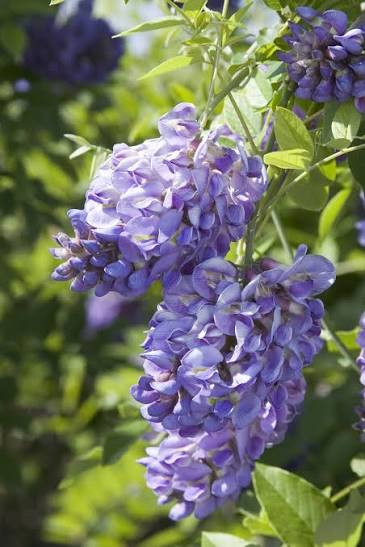
American Wisteria ‘Amethyst Falls’ (Wisteria frutescens ‘Amethyst Falls’)
American Wisteria ‘Amethyst Falls’ (Wisteria frutescens ‘Amethyst Falls’)
Low stock: 3 left
Couldn't load pickup availability
American Wisteria ‘Amethyst Falls’
Wisteria frutescens ‘Amethyst Falls’
Other Common Names: Amethyst Falls Wisteria, Native Wisteria
Top Pick: A more compact cultivar of native American Wisteria with cascading clusters of purple flowers and a more manageable growth habit than invasive Asian wisterias.
Quick Plant Info
- ☀️ Light: Full Sun to Part Shade
- 💧 Water: Medium
- 🌿 Type: Deciduous Perennial Vine
- 📏 Mature Size: Approximately 10–20 ft long with support
Plant Traits
Description
The classic beauty of wisteria in a native cultivar with a more garden-friendly growth habit.
‘Amethyst Falls’ is a selected cultivar of American Wisteria, a flowering vine native to the southeastern United States, including Texas. It produces cascading clusters of purple, pea-shaped flowers against lush green foliage.
Compared with the invasive Chinese and Japanese wisterias commonly found in landscapes, American Wisteria is generally less aggressive. ‘Amethyst Falls’ is especially valued for its relatively compact growth and its tendency to flower at a younger age.
The primary bloom occurs in spring, with additional flowering possible during summer. Its manageable size makes it particularly useful for residential arbors, pergolas, trellises, and fences where a larger wisteria could become overwhelming.
💜 Why it works
- Cascading clusters of rich purple flowers
- Native cultivar rather than an invasive Asian wisteria
- More compact growth than many wisterias
- Can flower at a relatively young age
- May rebloom after its primary spring display
- Attracts bees, butterflies, and other flower-visiting insects
- Supports native caterpillars
- Excellent for arbors, pergolas, and substantial trellises
- Strong ornamental choice for designed native landscapes
🐝 Wildlife value
The flowers attract bees, butterflies, and other visiting insects. As a cultivar of American Wisteria, its foliage can also support native caterpillars associated with the species, adding another connection to the garden food web.
Its leafy growth can provide additional cover and structure within a wildlife-friendly landscape.
🌱 Where it thrives
‘Amethyst Falls’ grows in full sun to part shade, with stronger flowering generally occurring with more sun. Give it a permanent location with a sturdy support that its twining stems can climb.
- Arbors and pergolas
- Strong trellises
- Sturdy fences
- Flowering screens
- Pollinator gardens
- Designed native landscapes
Soil: Adaptable to a range of soils with adequate drainage. Consistent moisture during establishment encourages strong root development.
✂️ Growth & maintenance
Although ‘Amethyst Falls’ is more restrained than many familiar wisterias, it is still a woody climbing vine and benefits from regular training and pruning.
Prune as needed after flowering to control size and direct new growth. Avoid excessive nitrogen fertilizer, which can encourage vigorous foliage at the expense of flowers.
Provide a sturdy support from the beginning and keep twining stems away from gutters, siding, and other structures where woody growth could become difficult to manage.
💧 Water (establishment note)
Water regularly during establishment. Once established, ‘Amethyst Falls’ can tolerate occasional dry periods, but moderate supplemental water during extended drought supports healthy growth and flowering.
Important Notes
Wisteria seeds and seed pods are toxic if ingested. Do not eat any part of the plant, and consider placement where children or pets may encounter fallen pods.
Although much less aggressive than invasive Chinese and Japanese wisterias, ‘Amethyst Falls’ is still a vigorous woody vine. Provide substantial support and plan for its mature size.
Pickup Information
Order online and select a pickup time at checkout. Plants are held for your scheduled pickup window.