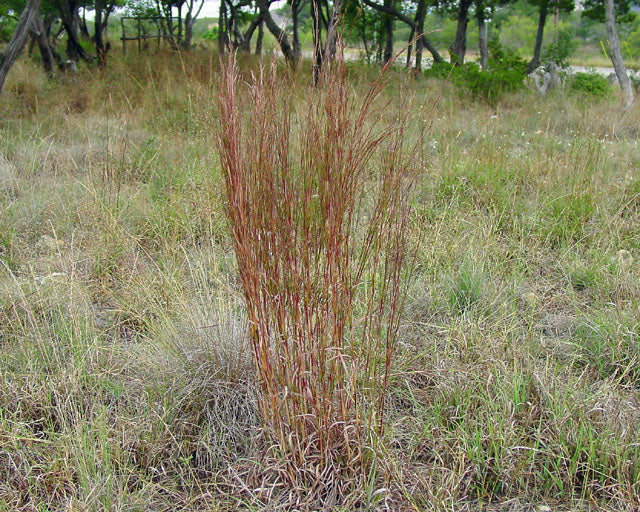
Little Bluestem (Schizachyrium scoparium)
Little Bluestem (Schizachyrium scoparium)
Low stock: 7 left
Couldn't load pickup availability
Little Bluestem
Schizachyrium scoparium
Top Pick: A beautiful North Texas native prairie grass with blue-green summer foliage, copper-red fall color, and exceptional value for birds, butterflies, and other wildlife.
Quick Plant Info
- ☀️ Light: Full Sun
- 💧 Water: Low
- 🌾 Type: Perennial Native Grass
- 📏 Mature Size: Approximately 2–4 ft tall × 1–2 ft wide
Plant Traits
Description
One of North America's signature prairie grasses, with remarkable beauty and ecological value in every season.
Little Bluestem is a warm-season native bunchgrass recognized for its fine-textured blue-green foliage, upright growth, and spectacular transformation into shades of copper, rust, orange, and reddish bronze in fall.
As the growing season progresses, delicate flowering stems develop into fluffy, silvery seedheads that catch the light and remain attractive into winter.
Unlike aggressive running grasses, Little Bluestem forms individual clumps, making it useful in both naturalistic prairie plantings and intentionally designed landscapes.
🌾 Four seasons of interest
In spring, fresh growth emerges in shades of green and blue-green. During summer, the grass develops an upright, finely textured form that adds movement and contrast to flowering perennials.
Fall brings its most dramatic transformation, with foliage turning copper, orange, and reddish bronze. The dried stems and silvery seedheads can remain standing through winter, providing both ornamental structure and wildlife habitat.
🐦 Wildlife value
Little Bluestem is a larval host for several native skipper butterflies, including the Common Wood-Nymph's grass-feeding relatives and various grass skippers. These caterpillars contribute to the insect food web that supports birds.
Its seeds are eaten by some seed-feeding birds, while the dense clumps provide cover and shelter for wildlife. Standing stems also offer valuable overwintering habitat for insects.
🌿 Why it works
- Native to North Texas prairies
- Beautiful blue-green foliage during the growing season
- Exceptional copper-red fall color
- Silvery seedheads provide winter interest
- Larval host for native skipper butterflies
- Seeds provide food for birds
- Dense clumps provide wildlife shelter
- Excellent heat and drought tolerance
- Strong architectural form for designed landscapes
- Works beautifully in mass plantings or mixed perennial borders
🌱 Where it thrives
Little Bluestem performs best in full sun and well-drained soil. It is naturally adapted to prairie environments and tolerates a range of soils, including clay, provided the planting location does not remain persistently wet.
- Native prairies and meadows
- Designed native landscapes
- Mass plantings
- Sunny borders
- Wildlife gardens
- Low-water landscapes
- Fall and winter interest gardens
Soil: Adaptable to a range of well-drained soils, including clay, loam, rocky, and sandy soils. Avoid excessive fertility and consistently wet conditions, which can encourage weak, floppy growth.
✂️ Growth & maintenance
Little Bluestem requires very little maintenance once established. Leave the stems standing through winter to preserve their ornamental value and provide shelter for overwintering insects.
Cut back old growth in late winter or early spring before new growth begins. Avoid heavy fertilization, which can cause the normally upright clumps to flop.
Plants remain in distinct bunches rather than spreading aggressively by underground runners. Some natural reseeding may occur where conditions are favorable.
💧 Water (establishment note)
Water regularly during establishment, allowing the soil to dry somewhat between waterings. Once established, Little Bluestem is highly drought tolerant and generally requires little supplemental irrigation.
Pickup Information
Order online and select a pickup time at checkout. Plants are held for your scheduled pickup window.